
Education, Affordability, and Careers in Deconstruction:
Building the Workforce for America’s Built Environment

By Jessica I. Marschall, CPA, ISA AM
President & CEO, The Green Mission Inc. | GM-ESG | MAS LLC | Probity Appraisal Group
Board Member & Treasurer, Rethos – Places Reimagined
February , 2026
When a building reaches the end of its functional life, what happens next says everything about our attitude towards the built environment and what comes next for the property. Do we send a wrecking ball through a century-old structure, reducing irreplaceable timber, hand-laid brick, and architectural character to a heap of landfill waste? Or do we recognize that these materials (and the craftsmanship embedded in them) still carry tremendous value?
This question sits at the heart of my work across our four companies, my board service at Rethos and Stafford Education Foundation, and my deepening conviction that deconstruction is not just an environmental imperative but a workforce and economic development opportunity that this country can no longer afford to ignore. At a time when housing affordability is in crisis, when the construction industry cannot find enough workers, and when young people need viable pathways to well-paying careers, deconstruction stands at the intersection of every one of these challenges.
As I begin my second term on the Board of Directors of Rethos now serving as Treasurer, I find myself at a unique vantage point. With more than 26 years as a CPA, approximately 500-1,000 IRS-qualified deconstruction appraisals completed through The Green Mission Inc. and Probity Appraisal Group each year, and a growing practice in corporate decommissioning and ESG reporting through GM-ESG, I have watched this industry from every angle: tax compliance, valuation, environmental sustainability, and workforce readiness. We have seen growth, but significant challenges persist.
The Affordability Crisis and Why the Built Environment Matters
I purchased my first home in Wauwatosa, Wisconsin in 2000 for $183,000. That home is now valued at approximately $725,000. That nearly fourfold increase is not a testament to some extraordinary renovation or rare real estate market. It is the national story. Across the country, housing costs have outpaced wages so dramatically that a 22-year-old today could not afford the same home I did coming out of grad school. The median home price in most metropolitan areas now exceeds what is attainable for a household earning the median income, and the shortage of affordable housing has become one of the defining domestic policy challenges of our time.
The construction labor shortage adds to the crisis. When there are not enough skilled workers to build, rehabilitate, and maintain housing, everything slows down. Projects take longer. Costs escalate. Fewer homes are completed. The Home Builders Institute estimates that the skilled labor shortage is costing the home building sector $10.8 billion per year, resulting in the lost production of approximately 19,000 single-family homes annually. Those are 19,000 families who cannot move into a new home because the workforce to build it simply does not exist.
Deconstruction is part of the solution in ways that are not always immediately obvious. When buildings are deconstructed rather than demolished, high-quality materials, including lumber, brick, stone, fixtures, and architectural components, re-enter the supply chain at a lower cost than new materials (with some exceptions—antique lumber for example). Reclaimed old-growth lumber, hand-fired brick, and period-appropriate hardware are not just environmentally superior alternatives; they are often more affordable for builders, homeowners, and community development organizations working on tight budgets. Every material that is salvaged through deconstruction is a material that does not need to be extracted, manufactured, and shipped from scratch. That translates directly to lower costs and greater accessibility for housing construction and rehabilitation.
We must address the shortage of housing, especially affordable housing, and simultaneously plug our community members into careers that can sustain personal economic goals. Deconstruction does both.
Rethos: Redefining What Preservation Means
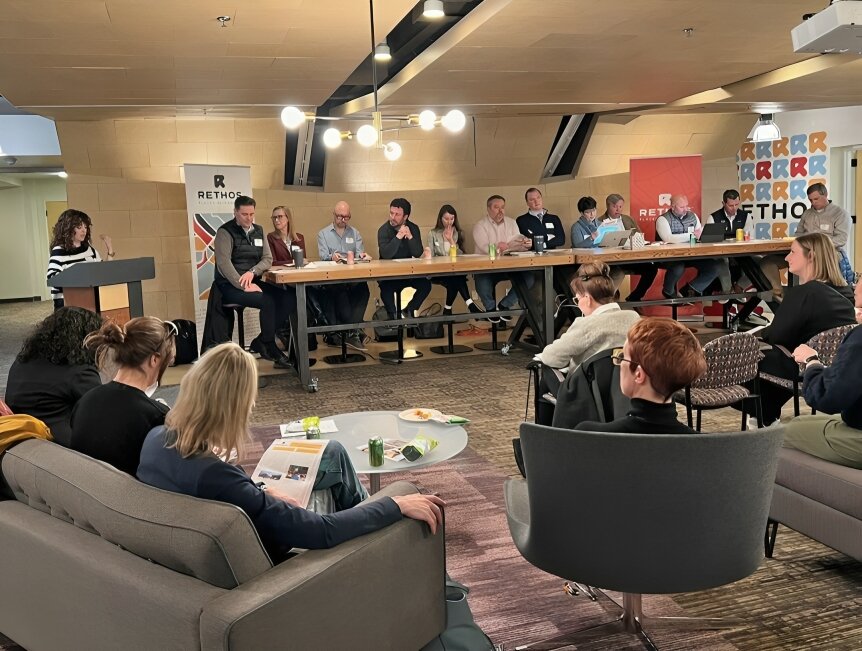
Founded in 1981 as the Preservation Alliance of Minnesota, Rethos has evolved into something far more expansive than its original name suggested. Today, as a 501(c)(3) nonprofit working nationwide, Rethos advocates for the use of old buildings and sites through a philosophy it calls the “New Preservation,” which is an approach that is every bit as much about the future as the past. The organization’s rebrand to Rethos reflected this evolution: preservation is no longer about arresting a building’s development and freezing it in time. It is about reimagining how historic structures can meet today’s needs while honoring the stories, craftsmanship, and cultural significance they embody. This progressive and future-leaning ideology is different than a lot of historic preservation organizations with whom we work.
Rethos operates across several interconnected program areas. Its Historic Rehabilitation Loan Program leverages Minnesota’s Historic Structure Rehabilitation Tax Credits to help developers transform underused and vacant historic properties into vibrant, income-generating community assets, including affordable housing. The Twelve22 Apartments project in St. Paul (a 100-year-old building converted into 55 units of affordable housing) exemplifies what is possible when preservation meets community need.
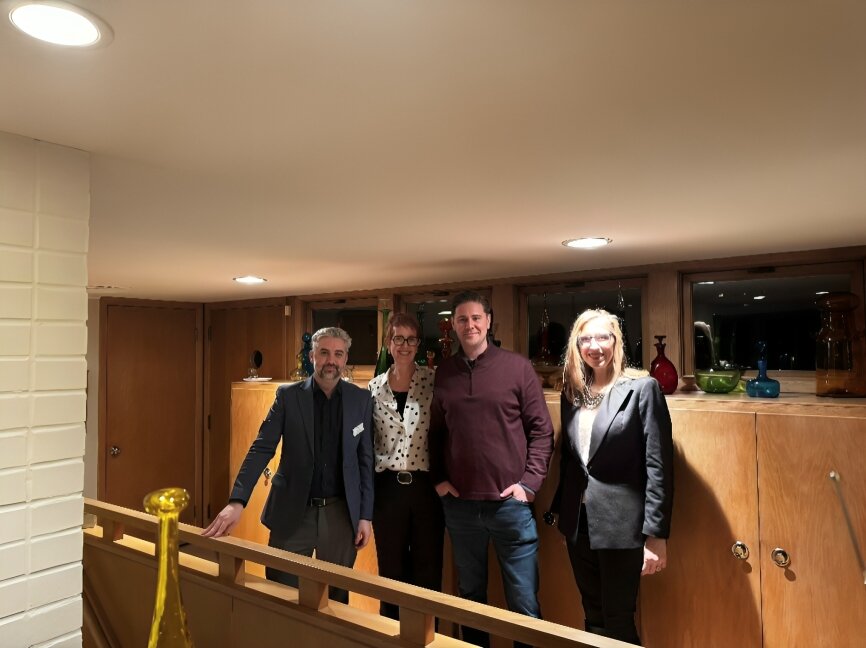
Through its Minnesota Main Streets program, Rethos currently supports 12 designated and 9 network communities, using the Main Street approach as a tool for downtown revitalization, new business development, and entrepreneurial support. The Rethos Policy Institute advocates at the Minnesota Legislature for building reuse and historic tax credit policy, while its equity and inclusion initiatives work to ensure that BIPOC communities, women, and working families are centered in preservation efforts.
Rethos also recently expanded its physical footprint, opening a new office in Duluth in January 2025 to extend its heritage tourism, education, and community engagement programming to northern Minnesota. The organization’s Doors Open events invite the public into historic buildings to learn about architecture and history, democratizing access to preservation knowledge.
I am thrilled to see Rethos’s growing commitment to sustainability and deconstruction education that aligns most directly with my own professional mission.
The Continuum: From Keeping the Bones to Full Deconstruction
Too often, conversations about what to do with aging buildings are framed as binary: save it or demolish it. The reality is far more nuanced, and understanding the full continuum of options is essential for property owners, developers, municipalities, and policymakers.
At one end of the spectrum is full preservation and adaptive reuse, or keeping the bones of the building intact, rehabilitating the structure, and giving it new purpose. This is the gold standard when a building has historic significance, structural integrity, and community value that justify the investment. Historic tax credits, both federal and state, provide powerful financial incentives for this approach, and Rethos’s loan program helps maximize their value. When you can keep the bones of a building, which includes its framing, its masonry walls, and its original character, you preserve not just material but identity.
Article Comprehensive Overview: Historic Tax Credits: Link
Article Historic Tax Credits and Deconstruction Tax Deductions: Link
Moving along the continuum, selective deconstruction involves carefully removing specific components from a building undergoing renovation. This often includes salvaging high-value elements like old-growth lumber, architectural millwork, historic fixtures, brick, and stone while the core structure remains. This approach is increasingly common in rehabilitation projects and can generate significant charitable contribution deductions for donated materials when properly appraised by an IRS-qualified appraiser, which is what we do at The Green Mission Inc. and Probity Appraisal Group.
At the far end of the continuum is full deconstruction, defined as the systematic disassembly of an entire structure to maximize the recovery of reusable materials. Unlike mechanical demolition, which reduces a building to rubble destined for a landfill, full deconstruction is construction in reverse. A skilled crew methodically dismantles the structure, salvaging lumber, brick, stone, metals, fixtures, and other components for reuse. The process is labor-intensive. A 1,400-square-foot house might require a crew of six to eight workers for full deconstruction versus two to three for demolition, but the environmental, economic, and community benefits are profound.
Article From Demolition to Donation: Understanding the Deconstruction Process: Link
And then there is conventional mechanical demolition with the typical wrecking ball or excavator reducing everything to debris. The United States generated more than 600 million tons of construction and demolition debris in 2018, more than twice the amount of municipal solid waste, with approximately 60% ending up in landfills. Demolition is not just wasteful; it is a public health problem. The dust and particulate matter generated by mechanical demolition can travel 400 feet from the source and has been connected to elevated blood lead levels in children and asthma in surrounding communities. These landfills disproportionately impact minority and lower-income communities, making demolition waste an environmental justice issue.
Understanding where a project falls on this continuum is precisely the kind of interdisciplinary expertise that the deconstruction industry needs more of.
Deconstruction as a Career: Jobs That Stay
The workforce shortage in construction is not a future problem. It is a present crisis. The construction industry needs to attract an estimated 439,000 new workers in 2025 alone to meet demand, with projections rising to nearly 500,000 in 2026. Over the next decade, 1.9 million additional workers will be needed just to keep pace with growth and retirements. Ninety-two percent of contractors report difficulty filling open positions, and workforce shortages are now the leading cause of project delays nationally.
What makes deconstruction especially compelling as a career pathway is that these are jobs with staying power. As a country, we need to dig into our infrastructure and built environment. The buildings, bridges, roads, and systems that support American life require maintenance, repair, rehabilitation, and, yes, deconstruction. These are jobs that cannot be offshored. They cannot be automated away by artificial intelligence. In an economy that is increasingly leaning into AI and digital transformation, the skilled trades, and deconstruction specifically, represent careers that will endure. They are careers that can pay good wages, provide healthcare and retirement benefits, and offer the stability that every working family needs.
Construction workers earn 24% more weekly than the average private-sector employee, with average hourly rates reaching $39.33 nationally. In states along the Pacific Coast, in the Northeast, and in Minnesota, average construction earnings exceed $40 per hour, with Alaska and Massachusetts topping $50. These are not marginal jobs. These are careers with genuine middle-class earning potential, and they do not require a four-year degree or the crushing student debt that comes with one.
Deconstruction work in particular requires a combination of physical skill and specialized knowledge that commands competitive compensation. A deconstruction crew member is not simply swinging a hammer. They are assessing material value, identifying hazardous materials, making judgment calls about structural sequencing, and working with appraisers and project managers to ensure that salvaged materials meet the standards required for charitable donation deductions and reuse markets. As the industry matures and deconstruction ordinances spread, the demand for these skills will only increase, and wages will follow.
Within this broader labor crisis, the deconstruction industry faces its own acute shortage, particularly back home on the East Coast. While cities like Portland, San Antonio, and Boulder have adopted deconstruction ordinances that are building local ecosystems of contractors, trainers, and reuse retailers, the East Coast has not kept pace. The demand for deconstruction services is increasing as municipalities adopt waste diversion policies, as ESG reporting requirements drive corporate decommissioning practices, and as property owners increasingly recognize the tax advantages of charitable material donations. But the contractor base is simply not there to service this growing demand, whether for selective deconstruction during rehabilitation projects or full structural deconstruction. We need expanded teams to match the scale of the opportunity.
Building the Pipeline: From the Classroom to the Job Site
If deconstruction is where the jobs are, then education is how we fill them. And the good news is that the building blocks for a robust training pipeline already exist. They just need to be connected.
Anna Schmiel and the Rethos Deconstruction Academy
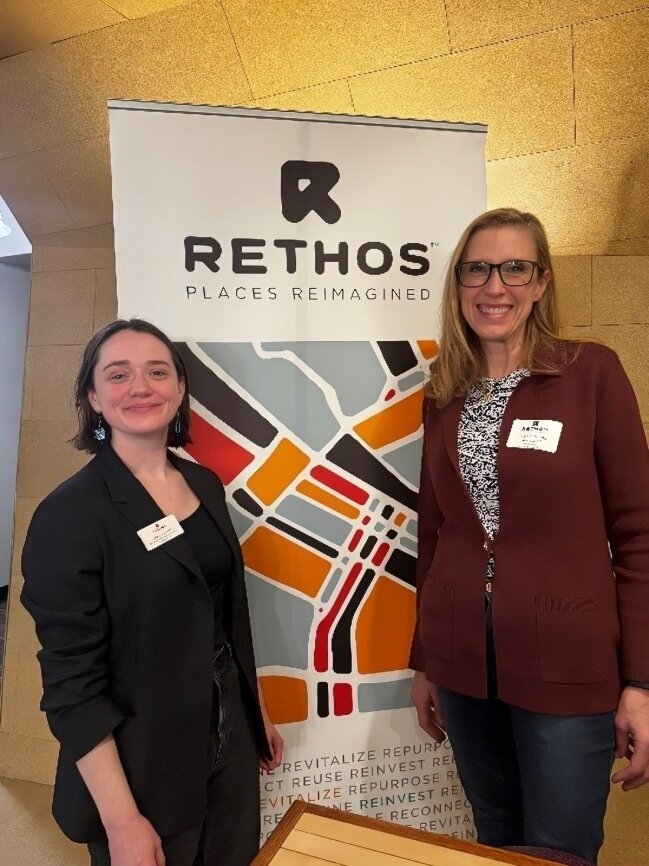
One of the most exciting developments at Rethos is the work being led by Anna Schmiel, the organization’s Continuing Education Manager. Anna is developing the Rethos Deconstruction Academy, a first-of-its-kind pilot training program funded through a Statewide Sustainable Building & Materials Management Grant from the Minnesota Pollution Control Agency (MPCA).
Anna brings a unique background to this work. A graduate of Carleton College who is pursuing her Master’s in Sustainable Design at the Minneapolis College of Art and Design, she has experience in community wealth building, anti-displacement policy at Hennepin County, and small business development through the Small Business Administration. Her thesis is developing a framework for layering additional community benefits onto public infrastructure projects, which is precisely the kind of systems thinking that the deconstruction industry needs.
The Deconstruction Academy is being built in partnership with Build Reuse, a national nonprofit dedicated to advancing building deconstruction and the reuse of building materials. Established in 1994, Build Reuse developed the Introduction to Deconstruction textbook, which serves as the foundational curriculum for deconstruction training programs nationwide. Build Reuse also maintains a National Registry of Deconstruction Trainers and has been instrumental in supporting deconstruction workforce development programs across the country, with a particular commitment to creating pathways for women, people of color, and people impacted by the justice system.
Under Anna’s leadership, the Rethos Deconstruction Academy will feature 16 on-demand digital modules, including 10 core modules expanding on Build Reuse’s textbook, plus 3 policy modules and 3 entrepreneurship modules. The program will recruit 20 individuals across Minnesota, with priority given to certified contractors seeking to expand their skills. After completing the digital curriculum, participants will undergo a week of hands-on, on-site deconstruction training at a live construction site.
The Academy is priced at $1,450 per participant ($450 for curriculum, $1,000 for on-site training), with five need-based scholarships that fully cover program costs including a travel stipend. Modules can also be purchased individually or as packaged lessons, making the curriculum accessible to a wider audience. Importantly, after the grant period ends in summer 2027, interested parties can contact Rethos to organize Deconstruction Academy programs customized to their locality, a scalable model with national implications.
The EPIC Center: Career and Technical Education That Works
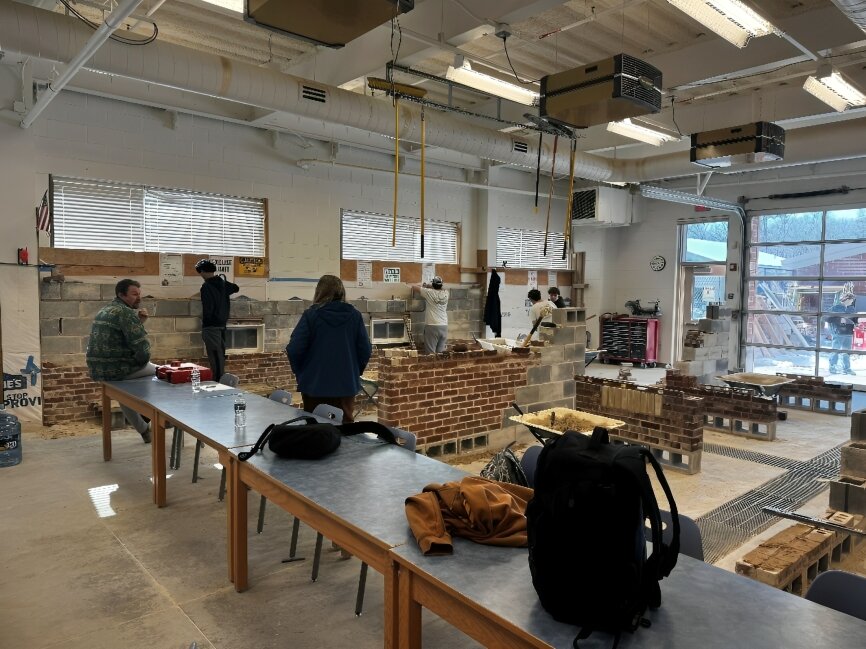
Programs like the EPIC Center at Stafford County Public Schools in Virginia show what is possible when public education takes the skilled trades seriously. The Engineering Professions and Industries of Construction (EPIC) Center at Stafford High School offers career and technical education pathways in carpentry, masonry, electricity, HVACR, engineering, data center operations, and fiber optic technology. Through its BOOTS program, “Building Occupational Opportunities to Students,” students design and build actual houses, earning credentials from the National Center for Construction Education and Research (NCCER) and OSHA certifications along the way. These students enter the workforce with real skills, real credentials, and real experience.
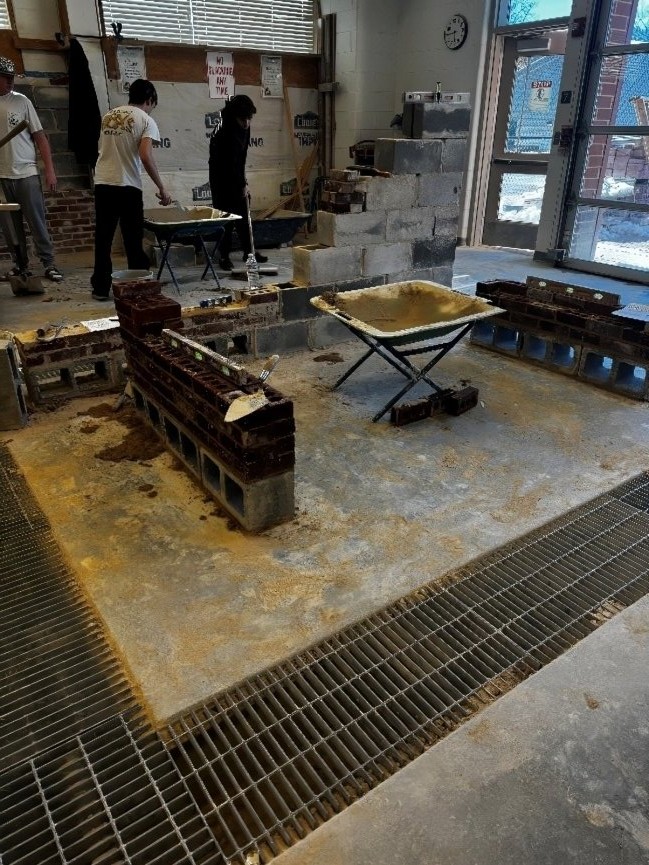
I had the honor of touring the EPIC Center a few weeks back in my role as President of the Stafford Education Foundation and was blown away with the hands-on training opportunities provided to our local students. These are not abstract classroom exercises. Students are framing walls, wiring circuits, and laying masonry on live projects. They graduate with industry-recognized credentials and a direct on-ramp to employment. In a region where 78% of contractors report project delays due to labor shortages, programs like EPIC are not extracurricular enrichment. They are economic infrastructure.
The skills taught in carpentry, masonry, and general building trades translate directly to deconstruction work. A student who understands how a building goes together understands how it can come apart: safely, efficiently, and in a way that preserves the value of materials for reuse. What Anna Schmiel is building at Rethos through the Deconstruction Academy, and what Build Reuse has developed through its national training curriculum, can be integrated into career and technical education programs like those at the EPIC Center.
Connecting the Dots: A Complete Pipeline
Imagine a pathway where a high school student at the EPIC Center learns foundational construction trades, earns an NCCER credential, and then enters a Deconstruction Academy program that adds specialized skills in material salvage assessment, hazardous material identification, deconstruction project management, and the policy and entrepreneurship knowledge needed to start or grow a deconstruction business. That is a complete pipeline from classroom to career, and it is a pipeline we desperately need, especially on the East Coast where deconstruction contractor capacity lags far behind demand.
This kind of educational integration requires no reinvention. The curriculum exists through Build Reuse and other highly skilled industry leaders like Dave Benninck of Re-Use Consulting Dave Bennink LinkedIn and Erich Krueger of Deconstruction Works Deconstruction Works. The training model is being piloted at Rethos. The CTE infrastructure exists in school systems like Stafford County. What is missing is the connective tissue: the partnerships, the funding streams, and the intentional coordination to link these programs together into a coherent workforce development strategy. Every state with aging building stock, which is to say every state, needs this pipeline.
The construction industry is also urging Congress and policymakers to at least double funding levels for high school career and technical education programs. This is not a partisan issue. It is an economic development imperative. Every dollar invested in CTE programs like the EPIC Center, and in specialized extensions like the Deconstruction Academy, returns multiples in the form of employed workers, completed projects, diverted waste, and strengthened communities.
Bringing Women Into the Field
While women represented 11.2% of the overall construction workforce in 2024, the highest share in two decades, the numbers in the actual trades tell a very different story. Women comprise only about 4% of construction and maintenance occupation roles, and the percentages are even lower in specific trades: roughly 3% of carpenters, 3% of electricians, and just over 2% of plumbers. The growth in women’s construction employment has been concentrated heavily in office, administrative, and management roles. In the field, progress has been painfully slow.
This needs to change, and deconstruction offers a compelling entry point. As a woman who has spent her career in industries that do not always make space for us, including tax advisory, appraisal, and the construction and demolition sector, I know firsthand that women can do this work and do it well. Check out the team at Re:Purpose Savannah Re:Purpose Savannah or Anna Perks of Perks Deconstruction. But we need to be intentional about recruitment, training, and the structural supports that make these careers viable for women, particularly working parents.
The shift-based nature of construction and deconstruction work can actually align well with the realities of working parenthood, particularly when employers commit to supportive benefits. Subsidized daycare centers integrated into a company’s benefits package can be transformative, removing one of the most significant barriers that keeps women out of field-based careers. When a mother knows that her children are cared for on-site or nearby, that the schedule is predictable, and that the work pays well with full benefits, the equation changes entirely. Full-time female construction workers already earn a median annual wage of $54,044, exceeding the median for women across all industries. The gender wage gap in construction is actually smaller than in many white-collar fields. The opportunity is real; we just need to make the path accessible.
Build Reuse has specifically identified workforce development for women as a priority in the deconstruction industry, and many of its member organizations are dedicated to creating pathways for women and other underrepresented groups. The registered apprenticeship model is particularly powerful: women in construction apprenticeships grew by 186% between 2015 and 2024, reaching over 10,800 women, though they still represent only about 5% of construction apprentices. Re:Purpose Savannah recently developed the first Department of Labor registered deconstruction apprenticeship program in the United States, a model that could and should be replicated across the East Coast and beyond.
As a mother of five who has built a career across four companies while raising children, I can say with conviction that the barriers to women entering the trades are not about capability. They are about access, support systems, and whether employers are willing to invest in the infrastructure that makes retention possible. Companies that offer subsidized childcare, predictable scheduling, healthcare, and retirement benefits will not struggle to recruit women. They will have waiting lists.
The Convergence: Why This Moment Matters
We are at a convergence point. The construction labor shortage is at crisis levels. Housing affordability has become a generational challenge. Municipalities are increasingly adopting deconstruction ordinances and waste diversion policies. ESG reporting requirements are pushing corporations to account for the environmental impact of their building portfolios. Tax incentives for charitable contributions of salvaged materials remain substantial. The environmental and public health case against conventional demolition grows stronger with every study. And organizations like Rethos, Build Reuse, and programs like the EPIC Center have built, or are building, the educational and institutional infrastructure to scale.
What we need now is coordination, investment, and intentionality. We need programs like Anna Schmiel’s Deconstruction Academy to be piloted, refined, and replicated in every state, not just Minnesota. We need career and technical education centers like the EPIC Center to incorporate deconstruction modules into their existing construction trade pathways. We need Build Reuse’s training curriculum to be the foundation for new apprenticeship programs, particularly in East Coast communities where contractor capacity is most constrained.
We need expanded teams, diverse teams that include women, to service the increasing demand for both selective and full deconstruction. We need contractors who understand not just how to take a building apart, but how to assess material value, manage hazardous materials, work with appraisers, and comply with the tax and regulatory requirements that make deconstruction economically viable for property owners.
And we need to tell the story of deconstruction in a way that reaches young people, especially young women, who may not yet know that this career path exists. A career in deconstruction is a career in sustainability. It is a career in preservation. It is a career in community building. And in an AI-leaning economy, it is a career with staying power.
A Personal Note
I know what the built environment means to families, financially, emotionally, and practically. As a CPA, I know how tax policy drives investment decisions. As an IRS-qualified appraiser, I know what salvaged building materials are worth. And as a board member of the Stafford Education Foundation and Treasurer of Rethos, I know that the organizations leading this work need strong financial governance, investment in education, and strategic vision.
The continuum from full preservation to full deconstruction is not a spectrum of compromise. Every point along it represents an opportunity. We honor our built heritage, keep materials out of landfills, create jobs, generate tax benefits, and build a more sustainable and equitable economy. A 22-year-old today could not afford the same home I did coming out of grad school. We must address the shortage of housing, especially affordable housing, and plug our community members into careers that can sustain personal economic goals. And who knows, maybe I will hang up my CPA practice and learn how to deconstruct…just kidding about that. The deconstruction contractors with whom I work know I trip over my own feet every day.
About the Author
Jessica I. Marschall, CPA, ISA AM, serves as President and CEO of The Green Mission Inc. (deconstruction appraisals and IRS-qualified valuations), GM-ESG (corporate decommissioning with ESG reporting), MAS LLC (tax advisory and small business valuation), and Probity Appraisal Group (art, antiques, and collectibles). She serves as Board Member and Treasurer of Rethos and as Board Member and Treasurer of the Stafford Education Foundation.
For more information about Rethos, visit rethos.org. For the Deconstruction Academy, contact Anna Schmiel at anna@rethos.org. For more information about Build Reuse, visit buildreuse.org. For the EPIC Center at Stafford High School, visit staffordschools.net.
